Department of Agrarian Reform
The Secretary

Email Address: contact_us@dar.gov.ph
Announcement
-

April 23, 2024
Sultan Kudarat ARBs receive farm machineries and inputs
Lobin Biñas, Chairman of Green MPC, expressed his gratitude to the DAR for its support of their livelihood. “Thank you to the DAR as…
-

April 22, 2024
Land Bank offers ways on how Eastern Visayas ARBs can pay delinquent loans
TACLOBAN CITY – The Land Bank of the Philippines (LBP) has created remedial actions on how agrarian reform beneficiaries (ARBs) of Eastern…
-
April 19, 2024
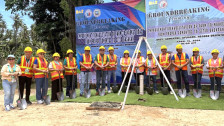
DAR, LGU in Negros Oriental start construction of P20-M farm-to-market road
AYUNGON, Negros Oriental — Farmers and residents in this town will soon enjoy a concrete road following the groundbreaking activities of the…
-

April 18, 2024
Farmers from Cagayan Valley receive land titles from VP Duterte and Sen. Marcos
“At hindi lang ho ‘yon. Dagdag pa ng ating mahal na Pangulo, siguraduhin mo na mayroon tayong support services. Farm-to-market roads…
-

April 10, 2024
ARBs receive new land titles, more support services
BAGO CITY – A total of 1,562 agrarian reform beneficiaries (ARBs) in Negros Occidental received land titles while 1,880 others were…
-

March 27, 2024
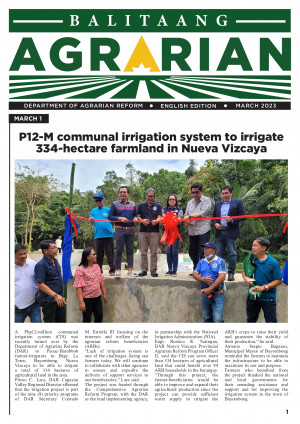
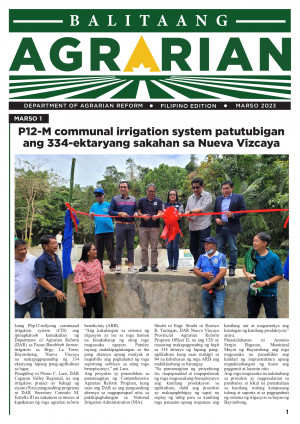
DAR, NIA complete P4.1M irrigation system for Bayombong farmers
Bayombong, Nueva Vizcaya (PIA) -- The Department of Agrarian Reform (DAR) and the National Irrigation Administration (NIA) have completed the…
-

March 26, 2024
DAR provides P1.5-M farm machinery to boost rice production
The Department of Agrarian Reform (DAR) provides 84 farmers, who are agrarian reform beneficiaries (ARB), P1.5 million worth of farm…
-

March 21, 2024
Antipolo City farmers rejoice as DAR distributes land ownership certificates
Following an extensive legal dispute that was resolved following the enactment of R.A. 6657, the land was eventually brought under Comprehensive…
-

April 22, 2024
Region: Caraga RegionCaraga field implementers sets steady course for 2024 deliverables
Touching on the directives from the Legal Affairs Office (LAO), PARPO II Petilla relayed that LAO is striving for all field offices to…
-
April 21, 2024
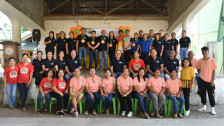
Region: Western VisayasAntique ARBs enhance processing center for more quality food products
In an effort to bolster rural enterprises and contribute to food security, the Department of Agrarian Reform in Antique turned over Php400k worth…
-

April 19, 2024
Region: Caraga RegionDAR Caraga strengthens support services operationalization
Prioritize the provision of farm productivity support to ARBs and ARB organizations (ARBOs) engaged in food production in ARCs with minimal…
-

April 19, 2024
Region: Ilocos RegionDAR Pangasinan partners with TESDA for Skills Training Program for ARBs
Pangasinan agrarian reform beneficiaries (ARBs) and their household members are set to benefit from a new scholarship program focused on…
Features
February 9, 2024
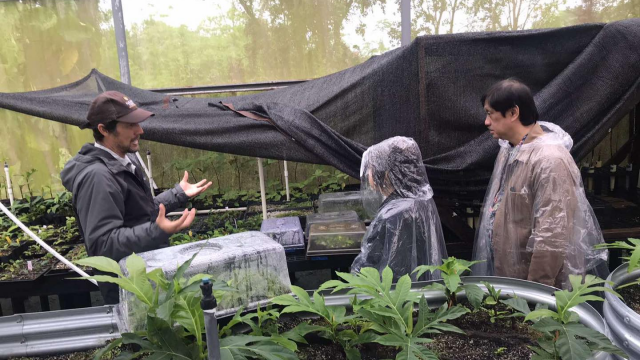
Breadfruit: A New and Nutritious Option for Filipino Staple Diets
In the flavorful fiesta of Filipino cuisine, a new contender is making waves—breadfruit, or as locals affectionately call it, "rimas,"…


November 26, 2020
DAR joins 18-day campaign to end violence against women

October 15, 2020
Radyo Agraryo sa Veritas846.
June 24, 2020
Ano ang DAR?

February 16, 2020
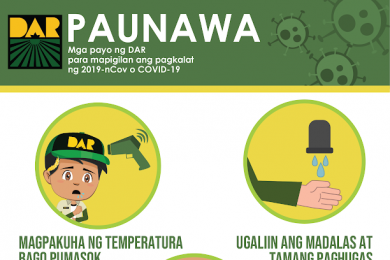
Mga payo ng DAR para mapigilan ang pagkalat ng 2019-nCov o COVID-19.

February 14, 2020
DAR 2019-nCov o COVID-19 infomercial.

December 31, 2019
DAR 2020 New Year greetings.

December 24, 2019
DAR Christmas greetings from DARwin and DARla.

November 17, 2019
Pagresolba ng DARAB sa mga sigalot.









April 27, 2019
Paano isinasagawa ang Arbitration?


April 25, 2019
Magkatulad nga ba ang Mediation at Conciliation?

April 24, 2019
Ano ang Pamamagitan o Mediation?

February 21, 2019
Pagpapalit-gamit ng lupa (land conversion).

February 17, 2019
Ano ang pinakamahalagang karapatan ng kasama?



January 29, 2019
DAR Sec. John Castriciones animation.

January 23, 2019
Accessible and Sustainable Lending Program for Small Farmers.
December 13, 2018
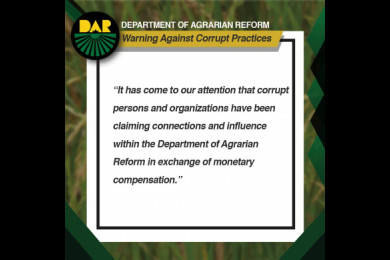
Warning against corrupt practices.

July 5, 2018
Life!

January 27, 2024
Bagong Pilipinas.

November 1, 2023
Hospital on Wheels offers free surgery at DAR.


July 27, 2023
SONA 2023.
July 24, 2023
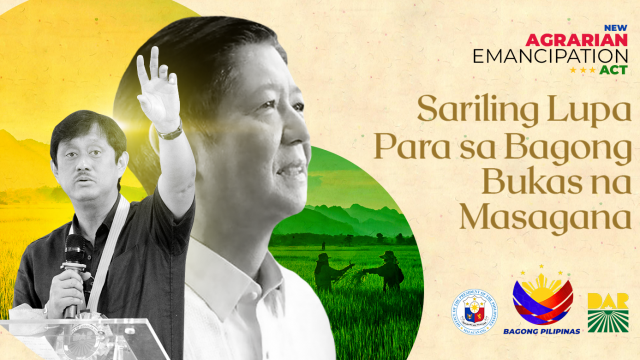
Sariling Lupa Para Sa Bagong Bukas Na Masagana.
Department of Agrarian Reform
The Department of Agrarian Reform is the lead government agency that holds and implements comprehensive and genuine agrarian reform which actualizes equitable land distribution, ownership, agricultural productivity, and tenurial security for, of and with the tillers of the land towards the improvement of their quality of life.